

How Payments Giants and Banks Are Embracing Digital Dollars for Faster & Cheaper Transactions
Stablecoin has become a key component of payment infrastructure for Banks and Payment companies. Major players believe that a major chunk of global payments will move on the payment rails built on stablecoin in next 5 years.
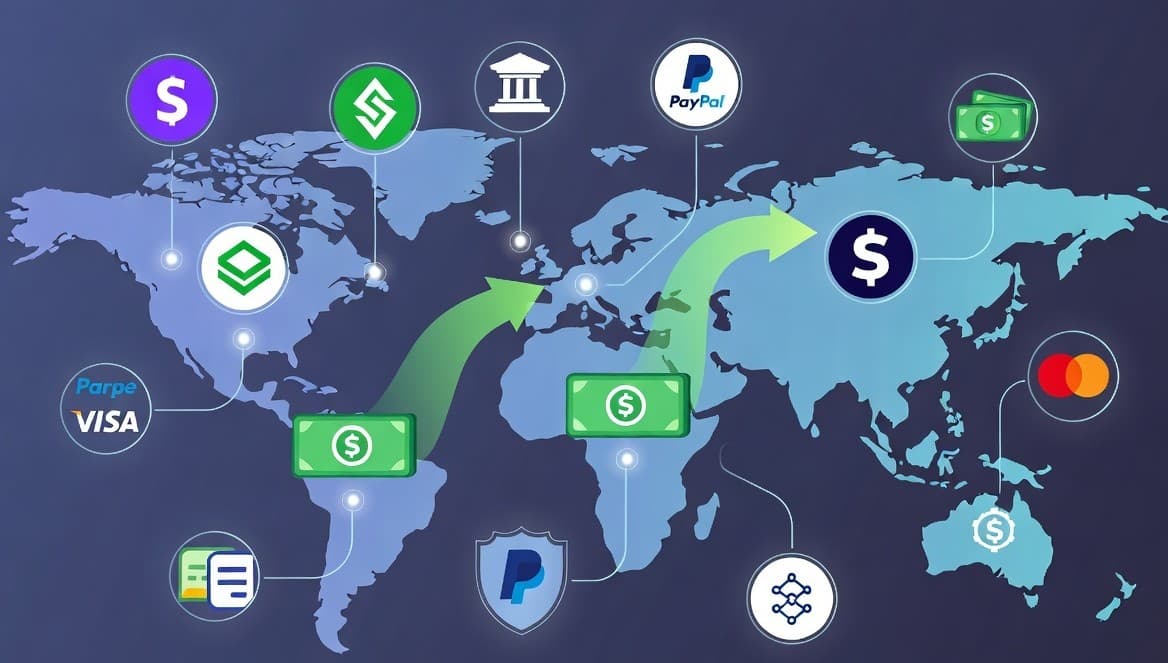
The Stablecoin Revolution
In the rapidly evolving world of digital finance, stablecoins—cryptocurrencies pegged to stable assets like the US dollar—are no longer a niche innovation but a core component of mainstream payment infrastructure. Global leaders such as Stripe, PayPal, Visa, and Mastercard are actively integrating stablecoin technology to empower merchants with seamless payments and to streamline notoriously inefficient cross-border transfers. Meanwhile, major banks are leveraging similar infrastructure to drive efficiency and speed. At the forefront of this shift is iPint (ipint.io), which is already powering retail merchant payments and preparing to launch iPint Enterprise for large-scale, orchestrated cross-border solutions.
Enabling Merchant Payments: Stablecoins Go Mainstream
Whats happening with global giants?
Stablecoins offer merchants the best of both worlds: the speed and low cost of blockchain settlements combined with the stability and familiarity of fiat currencies. This is particularly transformative for online and global businesses facing high fees, slow processing, and currency volatility.
Stripe now allows merchants to accept stablecoin payments, such as USDC, with automatic conversion to local fiat currencies. Stablecoin transaction volumes on Stripe have grown steadily at 30% month-over-month in early 2025, and customers paying with stablecoins are twice as likely to be new to the platform. Stripe supports stablecoins from over 100 countries, making it easier for businesses to expand globally without the friction of traditional rails. Through partnerships like Shopify and its acquisition of Bridge, Stripe is embedding stablecoin capabilities deeply into its infrastructure for both one-time and subscription payments.
PayPal launched its own stablecoin, PayPal USD (PYUSD), which is fully backed by USD reserves. US merchants can accept PYUSD (and other cryptos) via PayPal Checkout, with instant conversion options. PYUSD also enables fast, low-cost global sends across 70+ markets, and businesses benefit from lower fees and near-instant access to funds. PayPal’s “Pay with Crypto” feature connects merchants to a vast crypto user base while settling in fiat, reducing costs and expanding reach.
Visa and Mastercard are integrating stablecoins not just as payment methods but as settlement tools. Visa supports stablecoin-linked cards, allowing users to spend digital assets at millions of merchants worldwide, and has expanded settlement pilots across multiple blockchains with significant volume growth. Mastercard has acquired stablecoin infrastructure company BVNK and is enabling multiple stablecoins (USDC, PYUSD, etc.) for merchant settlements and cross-border flows via Mastercard Move.
These moves allow merchants to accept payments from crypto-native customers while receiving funds in their preferred currency, often with lower fees and faster finality than traditional cards or wires.
Revolutionizing Cross-Border Payments
Cross-border payments have long been plagued by high costs (often 5-7% or more), multi-day settlement times, and opacity. Stablecoins address these pain points with near-instant, 24/7 transfers at fractions of a penny per transaction.
Stripe, PayPal, Visa, and Mastercard are all prioritizing this use case. Stripe’s stablecoin tools excel for high-volume cross-border businesses, with surveys showing companies processing over $1M monthly in international volume are far more likely to adopt them. PayPal’s PYUSD facilitates global sends with reduced costs. Visa and Mastercard are upgrading their networks for stablecoin settlements, enabling issuers and acquirers to move funds efficiently across borders while maintaining compliance and reach.
This shift is critical for remittances, supplier payments, and e-commerce, where traditional systems like SWIFT can be slow and expensive.
Banks Embrace Stablecoin Infrastructure for Efficiency
Top global banks are not sitting on the sidelines. Institutions like JPMorgan, Citi, HSBC, and others are building and piloting tokenized deposit networks and blockchain platforms to complement or compete with stablecoins.
JPMorgan’s Kinexys (formerly Onyx) enables programmable payments, asset tokenization, and near-real-time settlement across borders. Citi and JPMorgan have highlighted stablecoins and tokenized money as central to their strategies for cross-border payments and treasury operations. Banks are participating in pilots with Swift for tokenized cross-border flows involving entities like HSBC, Citi, and Wells Fargo.
These efforts bring efficiency through 24/7 availability, reduced intermediary layers, programmable money (e.g., conditional transfers), and better liquidity management. Tokenized deposits and stablecoin rails allow banks to offer faster, cheaper services to corporate clients while maintaining regulatory compliance—bridging traditional finance with blockchain innovation.
iPint: Bridging Retail and Enterprise with Stablecoin Power
iPint is well-positioned in this landscape. Currently active in the retail segment, iPint provides a robust crypto payment gateway enabling merchants to accept Bitcoin, ETH, USDT, and other digital assets including stablecoins with a single integration. This volatility-free option via stablecoins helps retailers attract crypto users while settling reliably.
Looking ahead, iPint Enterprise will expand into large-scale cross-border transfers. Using a sophisticated orchestration platform built by iPint, it will enable efficient, compliant, and rapid movement of funds across borders—leveraging stablecoin infrastructure for speed and cost savings. This positions iPint as a comprehensive solution: seamless for everyday merchant transactions today and enterprise-grade for global treasury and B2B needs tomorrow.
The Road Ahead
The adoption of stablecoins by payments giants and banks signals a maturing ecosystem where digital assets enhance rather than disrupt traditional finance. Benefits include lower costs, faster settlements, greater inclusion for unbanked populations, and new opportunities for innovation like programmable payments.
Challenges remain—regulation, interoperability, and education—but momentum is undeniable, with stablecoin market caps and volumes surging. For merchants and enterprises, the message is clear: integrating stablecoin capabilities is no longer optional for staying competitive in global commerce.
iPint invites businesses to join this revolution. Whether you’re a retailer accepting crypto today or preparing for enterprise-scale transfers, the future of payments is stable, borderless, and efficient.
Sources include official announcements and reports from Stripe, PayPal, Visa, Mastercard, and banking institutions (2025-2026).